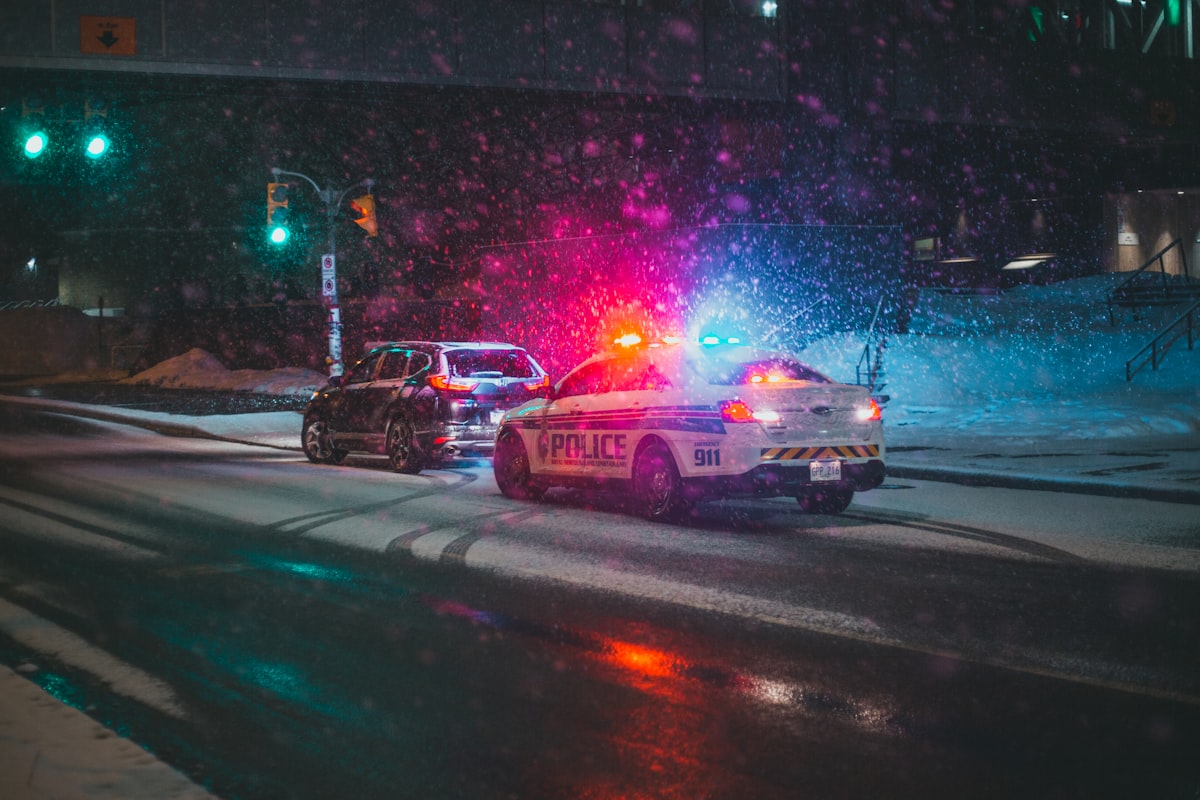
No. You do not need a police report to bring an Oklahoma car accident claim. But if police investigated the crash, the collision report can be important evidence when the insurance company evaluates who was responsible, and if no report exists, you can still build a strong claim with other evidence.
- Oklahoma law imposes several separate duties after a crash: drivers must exchange required information and render aid under 47 O.S. § 10-104, immediately notify law enforcement when a crash causes injury or death under 47 O.S. § 10-107, and separate written-report requirements may apply under 47 O.S. § 10-108.
- None of those duties require a police report before you can file a claim: Oklahoma doesn't condition an insurance claim or a lawsuit on having a report in hand. You can still pursue compensation without one, though it makes proving what happened harder.
- Adjusters review the report early, but it isn't the final word: insurance adjusters commonly look at the collision report when evaluating liability, though a police officer doesn't make the final legal determination of fault.
- The report has real limits as trial evidence: Oklahoma law restricts how collision reports can be used at trial, but the officer's firsthand observations and testimony can still matter even when the report itself doesn't come into evidence.
- No report? Preserve evidence fast: photos, the other driver's information, witness contacts, and dashcam or surveillance footage can all fill the gap, but that evidence disappears quickly.
- The filing deadline runs either way: many Oklahoma negligence claims arising from a motor vehicle collision are subject to a two-year limitations period under 12 O.S. § 95(A)(3), so waiting on paperwork is never a reason to delay talking to a lawyer.
When Oklahoma Law Actually Requires a Report
Oklahoma law imposes several separate duties on drivers after a crash, and they come from different statutes. Under 47 O.S. § 10-104, a driver involved in an accident has to stop, exchange identifying and insurance information with anyone else involved, and render reasonable aid. If the crash causes injury or death, 47 O.S. § 10-107 requires the driver to immediately notify the appropriate law-enforcement agency. Separate from both of those, written-report requirements can apply under 47 O.S. § 10-108, depending on circumstances such as whether anyone was hurt, whether police investigated at the scene, and the amount and type of property damage involved.
None of this is tied to whether you can bring an injury claim. It's a traffic-law requirement, similar to carrying insurance or stopping at the scene of a crash, not a prerequisite for a lawsuit. In practice, it means that for anything beyond a very minor fender-bender, you should call the police from the scene. Doing so isn't just about compliance. It's also the easiest way to make sure an official report exists in case you need it later.
Can I File an Insurance Claim Without a Police Report in Oklahoma?
Yes. Nothing in Oklahoma law requires a police report before an insurance company will consider your claim or before you can file a lawsuit. A police report is evidence. It is not your case. What the report does is give everyone involved, you, the insurance adjuster, and eventually a judge or jury, an independent record of the scene: the people involved, witness information, physical observations, and sometimes citations or an officer's assessment of how the collision occurred. But a police officer does not make the final legal determination of who is responsible for a crash.
That's why so many people assume a report is mandatory. Without one, you're not legally barred from recovering compensation, but you lose a piece of evidence that often does a lot of heavy lifting for you. See our step-by-step guide to what to do after an Oklahoma car accident for how to protect a claim from the moment a crash happens.
Why the Report Matters Even Though It's Not Required
Insurance adjusters commonly review the collision report early when evaluating liability. When one exists, it typically includes the officer's observations at the scene, statements from each driver, contact information for witnesses, a diagram or description of how the vehicles collided, and sometimes a citation issued to one driver. A favorable report can make liability easier to establish, while an inaccurate or incomplete report can create issues that need to be addressed with other evidence.
A collision report can be extremely important during an insurance claim even though the report itself may not be admissible at trial. Oklahoma law places specific restrictions on the use of collision reports as trial evidence under 47 O.S. § 10-115(C), and officer opinions about fault or causation present additional evidentiary problems. The officer's firsthand observations and testimony may still matter even when the report itself does not come into evidence. That legal technicality rarely changes how settlement negotiations play out, which is where the overwhelming majority of Oklahoma injury claims resolve. Adjusters review the report early, form an opinion, and negotiate accordingly. A report can also lead you to the officer as a witness and to any citation history relevant to fault.
What Happens If There's No Police Report
No report does not mean no claim. Plenty of legitimate injury claims move forward with no police report at all. This happens for a range of ordinary reasons:
- The crash happened on private property. Parking lots, private driveways, and some other private roads fall outside the areas many municipal police departments will respond to for a routine fender-bender.
- Officers were tied up elsewhere. In busier parts of Tulsa and Oklahoma City, especially during bad weather, police sometimes can't respond to every minor crash and will ask drivers to exchange information and file an online report instead.
- The injury wasn't apparent right away. Adrenaline masks pain. A crash that looked like a minor fender-bender at the scene can turn into a herniated disc or a concussion diagnosis days later, long after everyone drove away without calling anyone.
- One driver talked the other out of calling police. This happens more than people expect, usually because the at-fault driver doesn't want a citation or a rate increase.
If there is no police report, preserve what you can as soon as possible:
- Photos and video of both vehicles.
- Photos of the roadway or intersection where the crash happened.
- The other driver's license and insurance information.
- Witness names and phone numbers.
- Dashcam or Tesla-style footage, yours or a nearby driver's.
- Locations of nearby surveillance cameras that may have caught the crash.
- Texts, emails, or messages you sent describing what happened right after the collision.
Do this quickly. Surveillance footage can be overwritten, vehicles get repaired, witnesses become harder to locate, and electronic evidence can disappear.
What all of this does is shift more of the burden onto other evidence: photos from the scene, damage to both vehicles, your own written account while it's fresh, witness names and numbers, medical records tying your injuries to the crash, and sometimes a reconstruction of the collision by an expert. This is exactly the kind of case where having an attorney involved early makes the biggest difference, because that evidence has to be gathered and preserved before it disappears.
What Happens If the Other Driver Doesn't Report the Accident?
You are not at the mercy of the other driver's decision to call police or file paperwork. If they don't report the crash, or they give a different account to their own insurer, your own evidence, photos, witness statements, your written account, and medical records, still supports your claim. If you believe the other driver had a legal duty to report the crash and didn't, contacting the investigating agency or reporting it yourself can still be worthwhile. Either way, the other driver's decision not to report the crash doesn't weaken your right to pursue compensation. It just means your own documentation carries more of the weight.
How to Get a Copy of Your Oklahoma Crash Report
If police did respond to your crash, you can usually request the report in one of a few ways:
- Directly from the responding agency. Tulsa Police Department, the Tulsa County Sheriff's Office, and most other municipal and county agencies in Oklahoma allow you to request a copy in person or online, typically for a small fee.
- Through the Oklahoma Department of Public Safety. Crashes worked by the Oklahoma Highway Patrol, or reports that have been forwarded to the state, are often accessible through the DPS online crash report system.
- Through your attorney. Once you hire a lawyer, requesting the report becomes one of the first things the firm does, along with preserving 911 call recordings, body camera footage where it exists, and photos taken at the scene before any of it is deleted or overwritten.
Reports aren't always available immediately. Especially after a serious crash involving injuries, it can take the department days or weeks to finalize the paperwork. Don't wait on the report to start documenting your own evidence in the meantime.
Beyond the Report: What Else an Investigation Can Turn Up
The police report is only one piece of the investigation. Depending on the collision, there may also be 911 call recordings, officer body-camera footage, dash-camera footage, photographs uploaded by officers, CAD or dispatch records, nearby surveillance footage, and electronic data pulled from the vehicles themselves. None of that shows up in the report itself, and most of it is only available for a limited time before it's deleted or overwritten. Identifying what exists and requesting it before it disappears is one of the first things an attorney does after a serious crash.
What If the Report Gets Something Wrong?
Officers reconstruct what happened based on damage, statements, and physical evidence at the scene, often in a matter of minutes, and they don't always get it right. It's common for a report to list the wrong driver as at fault, omit a witness, or describe the point of impact inaccurately.
A mistaken report is not the end of your claim, and a bad report does not automatically mean you're at fault. You, or your attorney, can submit a written statement disputing specific portions of the report to the investigating agency, gather additional witness statements the officer didn't collect, bring in photos or video (dash cam, doorbell camera, or nearby business surveillance) that contradict the report, and, in a serious or disputed case, retain an accident reconstruction expert. Insurance adjusters and, eventually, juries weigh the police report alongside this other evidence. It's influential, but it isn't the final word.
Does a Police Report Determine Fault in Oklahoma?
No. A responding officer can note who they believe caused a crash, issue a citation, or describe how the vehicles collided, but that isn't a legal finding of fault. Fault in an Oklahoma injury claim is ultimately worked out by the insurance companies during negotiation or, if the case doesn't settle, by a judge or jury applying Oklahoma's modified comparative fault rule under 23 O.S. § 13. A police report is one piece of evidence among several, not a verdict. That matters most when the report gets something wrong, because an inaccurate report is a starting point to correct, not a final answer to accept.
What If the Crash Wasn't Reported At All?
If your crash caused injury, death, or damage that should have been reported under Oklahoma law and nobody reported it, that's a problem worth fixing, not a reason to give up on your claim. Contact the appropriate law-enforcement agency to find out whether a delayed, self-reported, or supplemental collision report is available in your situation. Availability varies by agency and by how much time has passed. Beyond that, your own contemporaneous notes, photos from your phone, texts or messages sent right after the crash describing what happened, and the other driver's insurance information, if you got it, can all substitute for a formal police account. An attorney can help you assemble this into a case that stands on its own.
The Deadline Doesn't Wait for Paperwork
Whether or not a police report exists, Oklahoma's statute of limitations keeps running. Many Oklahoma negligence claims arising from motor vehicle collisions are subject to a two-year limitations period under 12 O.S. § 95(A)(3). Other circumstances can shorten, extend, or otherwise affect a filing deadline. If that window closes, it typically doesn't matter how strong your evidence is or how clearly the other driver was at fault. Some people wait to talk to a lawyer because they're waiting on the report to come back, or because they assume no report means no case. Neither is a good reason to wait.
If a government vehicle or government-owned property was involved in your crash, such as a city bus, a police cruiser, or a road hazard on a city or county street, a much shorter written notice deadline can apply, sometimes as little as a year, so it's worth getting advice quickly rather than assuming the standard two years applies. And while you wait for a claim to resolve, remember that your own medical bills don't wait either. Our guide to who pays your medical bills after an Oklahoma car accident walks through how that works whether or not a police report exists.
Frequently Asked Questions
Do I legally need a police report to file a car accident claim in Oklahoma?
No. Oklahoma law doesn't require a police report before you can file an insurance claim or a lawsuit. It's strong evidence when it exists, but its absence doesn't bar your claim.
Is it illegal not to call the police after a car accident in Oklahoma?
Drivers involved in a crash causing injury or death must immediately notify law enforcement under 47 O.S. § 10-107, and separate duties to exchange information and render aid apply under 47 O.S. § 10-104. Whether those requirements were met is separate from whether you can still bring an injury claim.
What if I didn't realize I was hurt until after I left the scene?
This is common. Adrenaline can mask pain for hours or days after a crash. If you didn't call police because you thought you were fine, you can still file a claim once symptoms appear. Document your injuries with a doctor as soon as possible and gather whatever evidence you can from the scene, including photos, the other driver's information, and any witnesses.
Can I get a copy of my police report online?
Often, yes. Many Oklahoma police departments and the Oklahoma Department of Public Safety offer online portals for requesting crash reports for a small fee. Availability and turnaround time vary by agency.
Does a police report determine who was at fault?
Not on its own. An officer's assessment can be persuasive, but the final determination of fault is worked out by the insurance companies during negotiation or by a judge or jury applying Oklahoma's modified comparative fault rule, not by the responding officer.
What if the police report says I was at fault and I disagree?
A police report is influential but not the final determination of fault. You can dispute it with witness statements, photos, video evidence, or an accident reconstruction expert. Oklahoma's modified comparative fault rule under 23 O.S. § 13 also means that even if you were partly at fault, you can still recover damages as long as you weren't more than 50 percent responsible.
How long do I have to file a claim if there's no police report?
The same deadline generally applies either way: many Oklahoma negligence claims are subject to a two-year limitations period under 12 O.S. § 95(A)(3). Other circumstances can shorten or extend that deadline, and claims involving a government vehicle or government property can require written notice much sooner, so don't wait to get advice if either applies to your crash.
No police report doesn't mean no case. If you were hurt in an Oklahoma crash and no officer came to the scene, or the report contains something you believe is wrong, we can investigate what happened and preserve the evidence that still exists. Call (918) 770-9775 for a free consultation with Colton Richardson. There is no fee unless we win.