- Your civil personal injury lawsuit is completely separate from the criminal DUI case and proceeds on its own timeline. You can pursue full compensation regardless of whether the drunk driver is convicted, pleads guilty, or has charges reduced or dismissed.
- Punitive damages are available in DUI accident cases under 23 O.S. § 9.1 because driving drunk constitutes reckless disregard for the rights of others. In cases involving repeat DUI offenders or extremely high BAC levels, punitive damages can substantially exceed compensatory damages.
- You may be able to sue the bar, restaurant, or liquor store that served the drunk driver if they served a visibly intoxicated person or a minor, in violation of the conduct prohibited by 37A O.S. § 6-101. This civil dram shop liability comes from Oklahoma common law (Brigance v. Velvet Dove Restaurant, Inc., 1986 OK 41), not from § 6-101 itself, which is a criminal statute. Dram shop claims can significantly expand the pool of available insurance coverage.
- A DUI conviction or guilty plea in the criminal case can be used as evidence in your civil lawsuit under Oklahoma's negligence per se doctrine. Violation of 47 O.S. § 11-902 (DUI statute) establishes negligence as a matter of law.
- Oklahoma's minimum auto insurance requirement is only $25,000 per person under 47 O.S. § 7-204, which is often inadequate for serious DUI injuries. Underinsured motorist (UIM) coverage under your own policy (36 O.S. § 3636) may be critical to full recovery.
- The statute of limitations is two years under 12 O.S. § 95. Evidence in DUI cases, blood alcohol test results, police reports, surveillance footage, and witness statements, must be preserved immediately. Do not delay.
In Oklahoma, being injured by a drunk driver gives you two separate legal paths: the criminal DUI prosecution by the state and your civil personal injury lawsuit. The civil case proceeds independently and allows recovery of all compensatory damages plus punitive damages under 23 O.S. § 9.1, which are available because drunk driving constitutes reckless disregard for the rights of others. Oklahoma common-law dram shop liability, recognized in Brigance v. Velvet Dove Restaurant, Inc., 1986 OK 41, also allows victims to sue the bar or restaurant that served the intoxicated driver if they served a visibly intoxicated person or a minor in violation of 37A O.S. § 6-101.
Being injured by a drunk driver is one of the most infuriating situations an accident victim can face. The crash was entirely preventable. In Oklahoma, the law gives DUI accident victims powerful tools to seek justice, including damages that go far beyond what is available in a typical car accident case. Understanding your rights and acting quickly to preserve evidence is essential to maximizing your recovery.
The Criminal Case vs. Your Civil Lawsuit: Two Separate Proceedings
When a drunk driver injures you in Oklahoma, two completely separate legal processes unfold simultaneously. Understanding the difference between them is critical.
The criminal case is prosecuted by the state, either the Tulsa County District Attorney, the Oklahoma County District Attorney, or another county DA depending on where the accident occurred. The criminal case is about punishing the drunk driver for violating Oklahoma's DUI statute (47 O.S. § 11-902). You are not a party to the criminal case; you are a witness. The outcome of the criminal case, conviction, acquittal, plea deal, or dismissal, does not determine your right to civil compensation.
Your civil personal injury lawsuit is filed by you (through your attorney) against the drunk driver to recover compensation for your injuries, medical expenses, lost wages, and pain and suffering. The civil case uses a different standard of proof than the criminal case: preponderance of the evidence (more likely than not) rather than beyond a reasonable doubt. This means you can win your civil case even if the drunk driver is acquitted in the criminal case.
A DUI conviction or guilty plea in the criminal case is admissible in your civil lawsuit and can be powerful evidence. Under Oklahoma's negligence per se doctrine, a violation of 47 O.S. § 11-902 (the DUI statute) establishes negligence as a matter of law, you do not have to separately prove the driver was negligent if they were convicted of DUI.
Punitive Damages: The Key Legal Difference in DUI Cases
The most significant legal difference between a DUI accident case and a typical car accident case is the availability of punitive damages. Oklahoma law (23 O.S. § 9.1) allows punitive damages when the defendant acted with reckless disregard for the rights of others. Driving drunk, choosing to operate a vehicle while impaired by alcohol, generally qualifies as reckless disregard.
Punitive damages serve two purposes: to punish the defendant for egregious conduct and to deter others from similar behavior. They are awarded in addition to compensatory damages (medical expenses, lost wages, pain and suffering) and are separate from, and not limited by, the non-economic damages cap under 23 O.S. § 61.3.
Factors that increase the likelihood and amount of punitive damages in Oklahoma DUI cases include:
- Repeat DUI offenses. A driver with prior DUI convictions demonstrates a pattern of reckless disregard that courts and juries find particularly egregious.
- Extremely high BAC. A blood alcohol concentration significantly above the legal limit of 0.08 (47 O.S. § 11-902) demonstrates a higher degree of impairment and recklessness.
- Driving on a suspended license. If the drunk driver's license was already suspended for a prior DUI, the recklessness is compounded.
- Driving with a minor in the vehicle. Endangering a child while drunk is treated with particular severity.
- Fleeing the scene. Hit-and-run DUI cases involve an additional layer of reckless disregard.
Under 23 O.S. § 9.1, Oklahoma punitive damages follow a three-tier structure. Category I conduct (reckless disregard for the rights of others) is capped at the greater of $100,000 or the amount of actual damages awarded. Category II conduct (intentional and malicious) is capped at the greatest of $500,000, twice the actual damages, or the increased financial benefit the defendant derived from the conduct. Only in Category III, where the court itself (not the jury), outside the jury's presence, finds beyond a reasonable doubt that the defendant acted intentionally and with malice and engaged in conduct life-threatening to humans, may the jury award punitive damages without any cap. Extreme DUI conduct, such as a repeat offender driving at an extremely high BAC, can support the higher tiers, but the specific facts determine which tier applies.
Dram Shop Liability: Suing the Bar or Restaurant
In addition to suing the drunk driver directly, you may have a claim against the establishment that served them alcohol. Oklahoma's civil dram shop liability is a common-law negligence claim recognized by the Oklahoma Supreme Court in Brigance v. Velvet Dove Restaurant, Inc., 1986 OK 41. A bar, restaurant, or liquor store that serves alcohol in violation of the conduct prohibited by 37A O.S. § 6-101, which is a criminal and regulatory statute rather than the source of the civil claim itself, may be held civilly liable if:
- It sold or provided alcoholic beverages to a visibly intoxicated person who then causes injury to a third party, or
- It sold or provided alcoholic beverages to a minor who then causes injury to a third party
Dram shop claims can significantly expand the pool of available insurance coverage. Bars, restaurants, and liquor stores typically carry commercial general liability insurance with limits far higher than the drunk driver's personal auto policy. A bar with $1 million in liability coverage is a far better source of recovery than a driver with $25,000 in minimum coverage.
To succeed on a dram shop claim, you must prove that the establishment served the driver while they were visibly intoxicated, meaning their intoxication was apparent to a reasonable observer. Evidence includes surveillance footage from the bar, credit card records showing the number of drinks purchased, witness testimony from other patrons or bar staff, and the driver's BAC at the time of the accident (which can be extrapolated back to the time of service).
Dram shop claims have a two-year statute of limitations under 12 O.S. § 95, the same as the personal injury claim against the driver. However, evidence at the bar, surveillance footage, receipts, employee records, must be preserved immediately through a spoliation letter before it is overwritten or destroyed.
Insurance Coverage Issues in DUI Cases
Oklahoma requires minimum auto insurance coverage of only $25,000 per person and $50,000 per accident under 47 O.S. § 7-204. This minimum coverage is often wholly inadequate for serious DUI injuries. If the drunk driver carries only minimum coverage and your damages exceed $25,000, your options for additional recovery include:
Underinsured motorist (UIM) coverage. If you have UIM coverage under your own auto policy (required to be offered under 36 O.S. § 3636 unless you rejected it in writing), you can file a UIM claim with your own insurer for the difference between the drunk driver's policy limits and your actual damages. For example, if your damages are $200,000 and the drunk driver has $25,000 in coverage, your $100,000 UIM policy would pay an additional $75,000.
Dram shop liability. As discussed above, the bar or restaurant that served the driver may have substantial commercial liability coverage.
The driver's personal assets. If the drunk driver has significant personal assets, real estate, investment accounts, business interests, a judgment can be enforced against those assets. However, collecting on a judgment against an individual can be difficult and time-consuming.
Employer liability. If the drunk driver was driving a company vehicle or was at a work-sponsored event when they became intoxicated, the employer may be liable under respondeat superior or negligent entrustment theories.
Evidence Preservation in DUI Cases
DUI accident cases require immediate evidence preservation. Key evidence that must be secured quickly includes:
- Blood alcohol test results from the police investigation, these are typically in the police report and toxicology records
- Police report and DUI arrest records, including field sobriety test results and officer observations
- Surveillance footage from the accident scene, nearby businesses, and the bar or restaurant where the driver was drinking, retention periods vary by system and some footage may be overwritten quickly
- Witness statements from people at the bar, at the accident scene, and any passengers in either vehicle
- The drunk driver's social media, posts from the evening of the accident may show them drinking or at the establishment that served them
- Credit card and bar tab records showing what the driver consumed and when
Your 7-Step Action Plan After a DUI Accident in Oklahoma
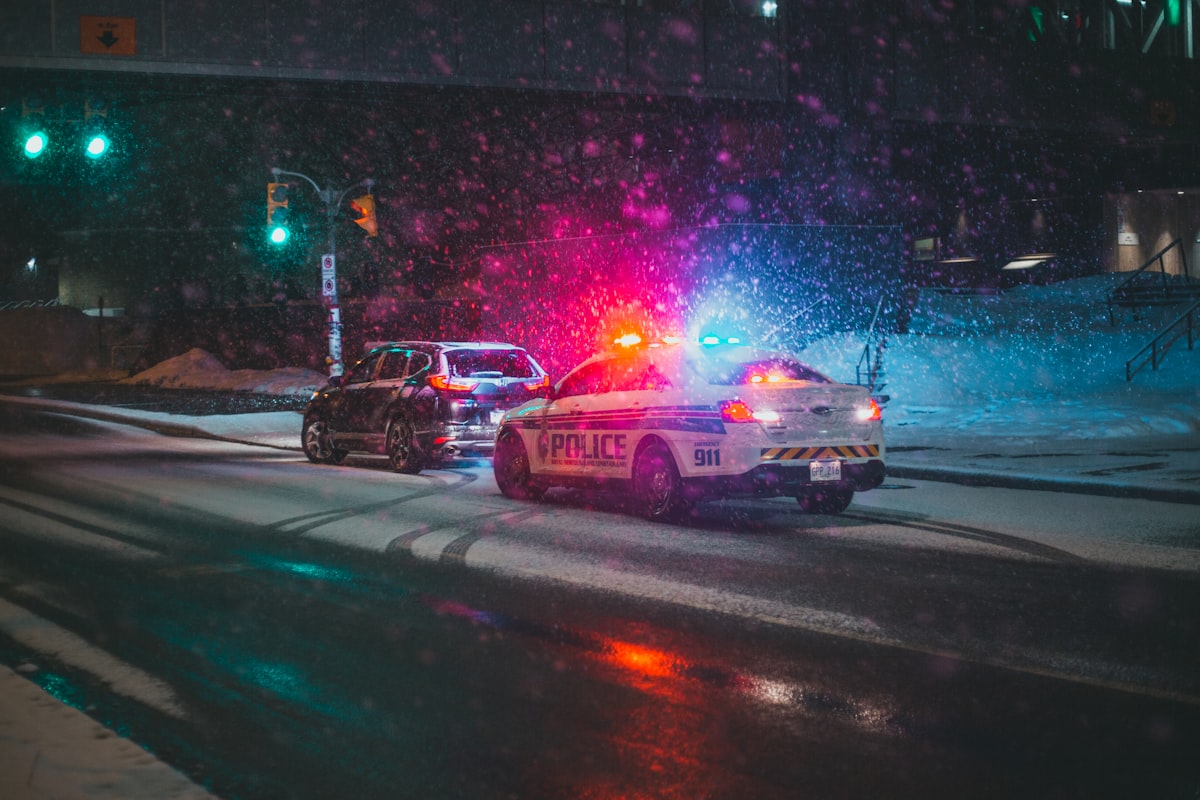
- Call 911. A police report documenting the DUI arrest is the foundation of your civil case. Do not leave the scene before police arrive.
- Get medical treatment immediately. Go to the emergency room or urgent care the same day, even if you feel okay. Adrenaline masks pain, and delayed treatment gaps hurt your claim.
- Document everything. Photograph the scene, vehicle damage, your injuries, and any skid marks or road conditions. Get the names and contact information of all witnesses.
- Do not give a recorded statement to the drunk driver's insurer. You have no legal obligation to do so, and it will almost always be used against you.
- Contact an attorney immediately. Surveillance footage at the bar is overwritten within days. A spoliation letter must be sent immediately to preserve it.
- Check your own insurance policy for UIM coverage. If the drunk driver has minimal coverage, your UIM policy may be critical to full recovery.
- Follow your doctor's treatment plan. Consistent medical treatment documents the full extent of your injuries and is essential to maximizing your recovery.
Frequently Asked Questions
Can I sue a drunk driver in Oklahoma even if they were not convicted?
Yes. Your civil personal injury lawsuit uses a preponderance of the evidence standard, more likely than not, rather than the beyond a reasonable doubt standard used in criminal cases. You can win your civil case even if the drunk driver is acquitted, has charges reduced to a lesser offense, or has the case dismissed. A DUI conviction is helpful evidence in your civil case, but it is not required. Blood alcohol test results, police observations, field sobriety test results, and witness testimony can all establish impairment in the civil case.
How much can I recover in a DUI accident case in Oklahoma?
In addition to standard compensatory damages (medical expenses, lost wages, pain and suffering under 23 O.S. § 61), DUI accident victims can recover punitive damages under 23 O.S. § 9.1, which are separate from, and not limited by, the non-economic damages cap. The total recovery depends on the severity of your injuries, the drunk driver's degree of recklessness (BAC level, prior DUI history), and the available insurance coverage. Cases involving permanent injuries, repeat DUI offenders, or dram shop liability can result in substantial recoveries.
What is the statute of limitations for a DUI accident lawsuit in Oklahoma?
The general statute of limitations for personal injury claims in Oklahoma is two years from the date of the accident under 12 O.S. § 95. The same two-year deadline applies to dram shop claims against the bar or restaurant. If the drunk driver was a government employee operating a government vehicle, a Notice of Tort Claim must be filed within one year under 51 O.S. § 156. Do not wait, evidence preservation is time-critical in DUI cases.
Can I sue the bar that served the drunk driver?
Yes, potentially, under Oklahoma's common-law dram shop liability (Brigance v. Velvet Dove Restaurant, Inc., 1986 OK 41), if the bar, restaurant, or liquor store served the driver while they were visibly intoxicated or served alcohol to a minor who then caused the accident, in violation of 37A O.S. § 6-101. Dram shop claims require evidence that the establishment served someone who was observably intoxicated, surveillance footage, bar tab records, witness testimony, and BAC extrapolation are all relevant. An attorney must act quickly to preserve surveillance footage before it is overwritten.
What if the drunk driver has no insurance or minimal coverage?
If the drunk driver carries only Oklahoma's minimum $25,000 coverage (47 O.S. § 7-204) or has no insurance at all, your options include: filing a UIM/UM claim under your own auto policy (36 O.S. § 3636), pursuing a dram shop claim against the establishment that served them, pursuing the driver's personal assets through a judgment, and investigating whether an employer or vehicle owner may share liability. An experienced attorney can identify all available sources of recovery and maximize your total compensation.
If you were injured by a drunk driver in Oklahoma, call (918) 770-9775 for a free consultation. I handle DUI accident cases across Tulsa, Oklahoma City, and all of Oklahoma. There is no fee unless we win.